Researching a York Historic Building With Official Records
Use Mansion House to compare York’s local heritage record with its national listing, separate historical dates from inspection dates and build a useful research trail.
Published
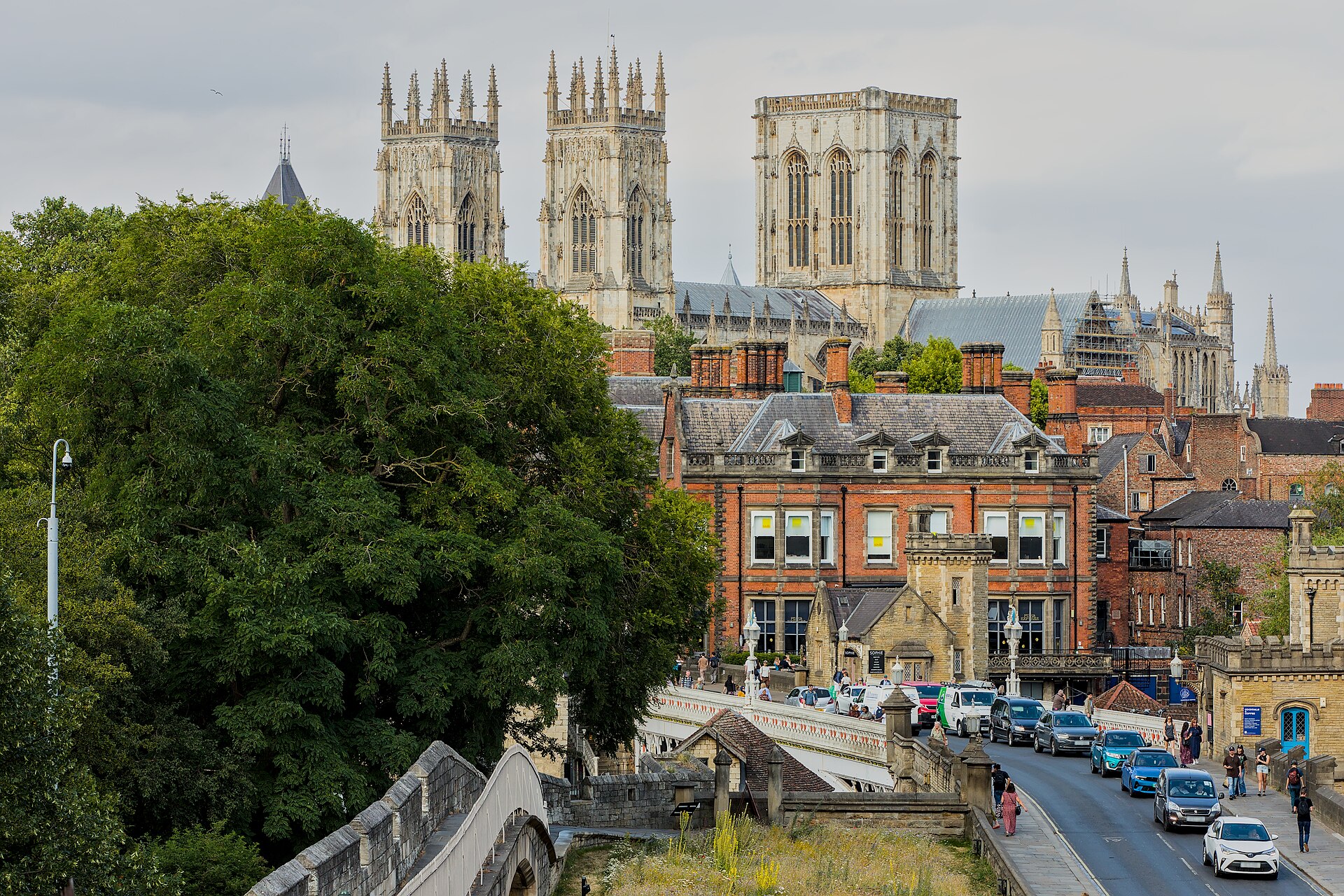

Researching a historic building in York starts with identifying the right records. For Mansion House, the York Historic Environment Record, the city’s local heritage record system, uses MYO1632. Historic England’s National Heritage List for England records the building under 1257969. Read together, they provide construction history, designation details and a dated reference to a condition inspection.[2][3]
Match the Building Before Reading Its History
Begin by saving both identifiers alongside the building’s name. MYO1632 and 1257969 belong to different record systems, so keep each number attached to its source. That gives you an exact reference to return to when a name search produces several results or a description changes.[2][3]
In the national entry, the statutory address is No.1, Coney Street, York. Preserve that wording in your notes. The full entry name also includes the railings and gas lamps attached to the front. Searching only for the house’s name can obscure these additional features, which both records explicitly describe.[2][3]
Use physical details as another check. The HER summary describes a front with three storeys and five bays, meaning five vertical divisions across the elevation. These details help you compare the written description with the building you’re investigating without relying on its name alone.[2]
Read the Dates as Different Kinds of Evidence
A building record can contain several dates answering entirely different questions. For Mansion House, construction, later alterations, designation and inspection each need their own place in your notes.[2][3]
| Date | What It Records | How to Use It |
|---|---|---|
| 1725 to 1733 | The construction period given for Mansion House | Use this range when describing when the building was constructed. |
| 1884 | Later alterations identified in the HER summary | Keep this separate from the original construction period. |
| 14 June 1954 | The national entry’s first listing date | Use this for the designation chronology. |
| 16 March 2016 | The national entry’s most recent amendment date | Record this as an amendment to the entry, without treating it as a building-work date. |
| March 2023 | A fabric condition inspection referenced by the HER | Attach any findings you discuss to this inspection date. |
For a short building history, you might need only the construction range and the alterations. For a study of its recorded heritage status, the listing and amendment dates become relevant. Copying every date into one undifferentiated timeline makes it harder to tell what actually happened to the building.[2][3]
What Each Mansion House Record Adds
Use the national entry to establish the formal designation. It identifies Mansion House, railings and gas lamps attached to front as a Grade I listed building, supplies the statutory address and gives the listing dates. Those labelled fields provide a clear starting point for recording its designated identity.[3]
The HER adds a different research lead: its description refers to a March 2023 fabric condition inspection under reference SYO3143. Save that report reference separately from MYO1632. The building record and the inspection report are different items, and the report reference lets you identify the evidence behind the condition summary.[2]
There’s also uncertainty worth preserving. The HER summary attributes the design only tentatively to William Etty. If you use that attribution, keep the qualification. A confident name in your own notes would turn a possibility in the record into an unsupported conclusion.[2]
Keep the Inspection Findings in Their Period
The HER says the March 2023 inspection highlighted high-priority repairs that had not been addressed during conservation and repair works in 2018. That is a dated account of the inspection’s findings. It doesn’t establish whether those repairs remain outstanding in October 2026, or whether subsequent work has resolved them.[2]
Keep historical description and present-day questions separate too. These records provide evidence for researching the building. They don’t establish current opening arrangements, entry prices or visitor accessibility, and a listing record supplies no permission to undertake building works.[1][2][3]
Repeat the Method for Another York Building
- Identify the building using its recorded name, address and location details. Compare descriptive features before combining information from two records.
- Save each record’s identifier and URL. Keep report references separate from building and designation identifiers.
- Label dates by purpose, such as construction, alteration, first listing, amendment or inspection.
- Record qualifications alongside claims. Preserve uncertain attributions and attach condition findings to their observation date.
- Note when you consulted each record so you can distinguish your research date from the historical dates it contains.
If your enquiry is for planning or commercial use, York HER’s Find out more page provides a route to commission a full HER search and read its information policy. It also separates guidance on listed buildings, conservation areas and planning archaeology. Follow the route that matches your purpose before treating a public building record as the complete evidence for a project.[1]
Sources and checks
These sources were used for this article. Availability, prices and service details can change after the stated check date.
- Find out more - York Historic Environment Record
Checked 20 October 2026.
York HER provides a route to commission a full search for commercial use or planning purposes and consult its information policy. The guidance page distinguishes planning archaeology, conservation areas and listed-building information. Listed-building consent is a separate guidance topic from researching a building record.
- MYO1632 - Mansion House - York Historic Environment Record
Checked 20 October 2026.
York HER identifies Mansion House with building-record identifier MYO1632. The summary includes the attached front railings and gas lamp standards. The record gives construction as 1725 to 1733 and alterations in 1884. The summary describes a three-storey, five-bay front and makes only a tentative attribution to William Etty. A March 2023 fabric condition inspection is referenced as SYO3143. The HER says that inspection highlighted high-priority repairs unaddressed during the 2018 conservation and repair works, without establishing their condition in October 2026.
- Mansion House, railings and gas lamps attached to front, Non Civil Parish - 1257969 | Historic England
Checked 20 October 2026.
The National Heritage List entry number is 1257969. The designated building is Grade I. The entry name includes Mansion House, railings and gas lamps attached to front. The statutory address is No.1, Coney Street, York. The first listing date is 14 June 1954. The most recent amendment date is 16 March 2016.