York Residents in Numbers: The Census 2021 Population and Age Profile
York unitary authority had 202,821 usual residents on Census Day in 2021. A closer look at their ages, living arrangements and how students are counted.
Published
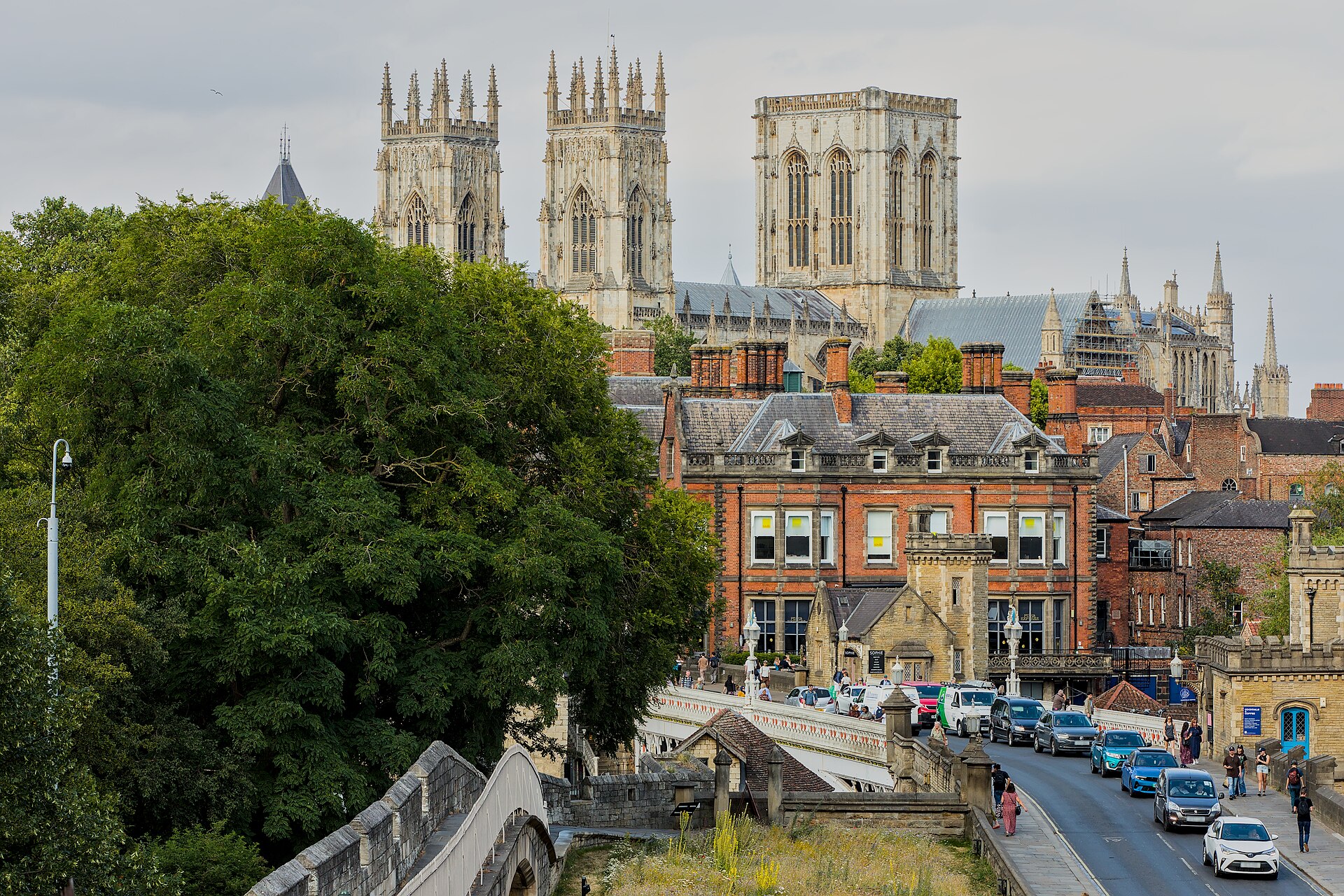

York’s Census 2021 population was 202,821 usual residents across the unitary authority. That figure describes the resident population on 21 March 2021. Understanding its geography and counting rules helps explain how a population total relates to students, communal accommodation and questions about visitors.[1][3][4]
Which York Does the Population Figure Describe?
The official records identify York with the geography code E06000014. Use that code when checking whether another table covers the same local authority. A figure for a neighbourhood or the city centre needs its own geographical definition before you can compare it with this authority-wide total.[4][5]
Both the residence-type table, TS001, and the age table, TS007A, give York a total of 202,821 usual residents. Their units are people. The residence table divides those people between households and communal establishments, while the age table groups them by their age on Census Day.[1][2][4][5]
York’s Age Profile Beyond a Single Average
Among the individual five-year bands, ages 20 to 24 formed York’s largest group in Census 2021, with 20,355 residents, or 10.0% of the authority’s population. The broader groups below combine the official bands to make the overall age distribution easier to read.[2][5]
| Age Group on 21 March 2021 | York Usual Residents | Share of York Total |
|---|---|---|
| 0 to 14 | 28,838 | 14.2% |
| 15 to 24 | 35,571 | 17.5% |
| 25 to 49 | 62,201 | 30.7% |
| 50 to 64 | 37,478 | 18.5% |
| 65 to 74 | 20,265 | 10.0% |
| 75 to 84 | 12,987 | 6.4% |
| 85 and over | 5,481 | 2.7% |
| All ages | 202,821 | 100.0% |
These groups cover different numbers of years, so their sizes need care when comparing them. The 25-to-49 group spans a much longer stretch of life than the 65-to-74 group. Combining the three oldest rows gives 38,733 residents aged 65 and over, or 19.1%, compared with 28,838 residents under 15.[5]
Why the Young Adult Figure Is Not a Student Total
The Office for National Statistics, which produces the census, counts students as usually resident at their term-time address, even if they were physically elsewhere on Census Day. For students whose term-time address was in York, that rule places them within York’s usual-resident population.[3]
You shouldn’t add a separate student total to the 202,821 residents. Equally, the 20-to-24 age band cannot tell you how many students lived in York. TS007A classifies people by age and contains no education-status breakdown. Calling all 20,355 people in that band students would assign them a characteristic the table doesn’t measure.[2][3][5]
People in Households and Communal Establishments
Of York’s usual residents in Census 2021, 191,572 lived in households and 11,249 lived in communal establishments. Together, those two categories account for the full population total. Communal-establishment residents made up 5.5%, calculated using the total from the same residence-type table.[1][4]
The household figure counts residents, rather than the number of homes or households. The communal-establishment figure also needs a careful label. This table provides a living-arrangement category, without a breakdown of residents’ ages or student status. It cannot establish how many of York’s students lived in communal accommodation.[1][4]
How to Compare Resident and Tourism Figures
Before setting a tourism statistic beside York’s population, check what it counts and over what period. These census tables measure usual residents at a specified date. They provide no count of visitor trips, overnight stays or people present in the centre on a particular afternoon.[1][2][4][5]
For a comparison, keep the resident denominator labelled as York unitary authority, Census 2021. A tourism measure needs its own stated geography, period and unit. Dividing another figure by 202,821 can produce a ratio, but the meaning of that ratio depends on those definitions.[1][4]
How the Figures Were Calculated
The age table above uses TS007A records for York, E06000014, with observation year 2021. Each broader group sums non-overlapping five-year bands, with the final open-ended band covering everyone aged 85 and over. The grouped counts sum to 202,821. Each percentage is the group count divided by that same table’s total, multiplied by 100 and rounded to one decimal place.[2][5]
Census results are estimates adjusted for non-response. Privacy protection also makes small changes to some counts, which can create differences between tables. These figures retain their Census Day meaning even when downloaded later. For a neighbourhood question, seek the corresponding local figures before applying York’s authority-wide age shares.[1][2][3]
Sources and checks
These sources were used for this article. Availability, prices and service details can change after the stated check date.
- TS001 - Number of usual residents in households and communal establishments - Nomis - Official Census and Labour Market Statistics
Checked 20 October 2026.
TS001 classifies usual residents by residence in households or communal establishments. The observations relate to Census Day, 21 March 2021. The categories describe residents and their living arrangements. Disclosure control can create small differences between tables.
- TS007A - Age by five-year age bands - Nomis - Official Census and Labour Market Statistics
Checked 20 October 2026.
TS007A classifies usual residents by age on 21 March 2021. The age categories support the article’s non-overlapping grouped age table. The oldest category covers ages 85 and over. The age classification alone does not identify student status. Disclosure control can cause small differences between tables.
- How life has changed in York: Census 2021
Checked 20 October 2026.
The census describes the usually resident population on 21 March 2021. Published census results are adjusted for estimated non-response. Students are counted at their term-time address even when physically absent on Census Day. Students with term-time addresses in York belong within its usual-resident population rather than forming an additional population to add.
- TS001
Checked 20 October 2026.
The 2021 York records use geography code E06000014 and a local-authority geography. York had 202,821 usual residents in Census 2021. There were 191,572 residents in households and 11,249 in communal establishments. The two residence categories sum to 202,821. The communal-establishment share is 100 × 11,249 ÷ 202,821, rounded to one decimal place, giving 5.5%. These residence-type records do not provide age, education-status or visitor measures.
- TS007A
Checked 20 October 2026.
The York age records use geography code E06000014 and observation year 2021, with a total of 202,821. Ages 20 to 24 are the largest individual five-year band, containing 20,355 residents. Ages 0 to 14 total 8,615 + 9,902 + 10,321 = 28,838. Ages 15 to 24 total 15,216 + 20,355 = 35,571. Ages 25 to 49 total 12,971 + 12,874 + 12,552 + 11,872 + 11,932 = 62,201. Ages 50 to 64 total 13,260 + 12,962 + 11,256 = 37,478. Ages 65 to 74 total 9,783 + 10,482 = 20,265. Ages 75 to 84 total 7,465 + 5,522 = 12,987. Ages 85 and over total 5,481. The seven grouped age counts sum to 202,821. Each age share uses 100 × group count ÷ 202,821, rounded to one decimal place, giving 14.2%, 17.5%, 30.7%, 18.5%, 10.0%, 6.4% and 2.7%. The 20-to-24 share uses 100 × 20,355 ÷ 202,821, rounded to one decimal place, giving 10.0%. Residents aged 65 and over total 20,265 + 12,987 + 5,481 = 38,733, giving 19.1% using the same denominator and rounding. These age records do not provide student-status or visitor measures.